
Our Services
When planning a service, you have many options available to you and we will do all that we can to provide a beautiful and respectful ceremony. No matter your choice, we can offer you a space to join with family and friends in grief, comfort and love. And above all, we will do our utmost to honor your loved one. We will be happy to go over all your options and answer any questions that you may have.
TRADITIONAL FUNERAL SERVICES
The Basics of a Traditional Funeral Service
- Visitation: This is often called a viewing or a wake. Guests come to pay their respects to the deceased by viewing their casketed body and spending time with the grieving family. A visitation can occur at any time before the funeral service.
- Funeral Service: This event commonly takes place at the funeral home, a church, or at the graveside. It can include music, the reading of literary or religious passages, a eulogy, prayer, and the singing of hymns.
- Committal Service: If the family plans to bury the deceased, this stage involves the vehicle procession to the cemetery.
- Funeral Reception: Many families may choose to host this post-service gathering (or repast) at a reception hall. This is considered a time to share memories, laughter, and support.

GRAVESIDE SERVICE
A graveside service can be thought of as an abridged version of a funeral. It’s average running time is between 15 – 30 minutes. Many of the features of a traditional funeral are present but minimized. For example, viewings and visitations are not held. The funeral conductor/officiant can be a member of the clergy, a funeral director, or a friend or family member. However, the service in general is much shorter, requiring less of the officiant’s time. Pallbearers are generally used to carry/escort the casket from the funeral coach to graveside service, however, the casket can also be “pre-set” by the time service attendees arrive. Usually only one eulogy is delivered rather than multiple eulogies, and there tend to be fewer readings and/or prayers. There are usually fewer flower arrangements or no flower arrangements, which can save money. Graveside services are often the chosen location for Military honors to be rendered. Photo slideshows, physical photographs, and video tributes are not part of a graveside service, as the location generally cannot accommodate them.
Graveside services may be limited to only family members or may be open to all. If you are having a graveside service after a traditional funeral, you can invite everyone who attended the funeral service to attend the graveside service, or you can let people know that you’d like to keep the service private.

BURIAL SERVICE
Burials are traditionally the choice for families. This service normally involves a visitation followed by a funeral service in a church, chapel or other chosen place of worship. We want to honor your wishes and personalize a service tailored to you and your family. We have an abundant number of options including green burials to help your family choose funeral services and we would be honored to help you. We are also happy to coordinate applicable military honors for our brave and honorable veterans, as well as honors due to our public safety personnel. Military veteran and public safety discount packages are offered for their unwavering service to our United States of America.
Sprowl honors and appreciates the blood, sweat and tears shed by all”
Selecting a Cemetery & Burial Plot
Before we get too far into the subject, we should mention that a family member may have already chosen and purchased a burial plot or mausoleum crypt. It's also very possible a distant relative purchased a large section in a local cemetery intended for the future burial of family members. In either of those situations, you'll need to obtain the documents necessary to prove ownership of burial rights and then bring them to the initial meeting with the funeral director.
What if there is no such pre-plan in place? Then you will need to locate a cemetery and select the burial property on your own. And while we know today's consumers are smart and have access to more information about products and services than ever before, we also know that the purchase of cemetery property isn't a commonly made transaction. Simply contact us for assistance with this process.

CREMATION
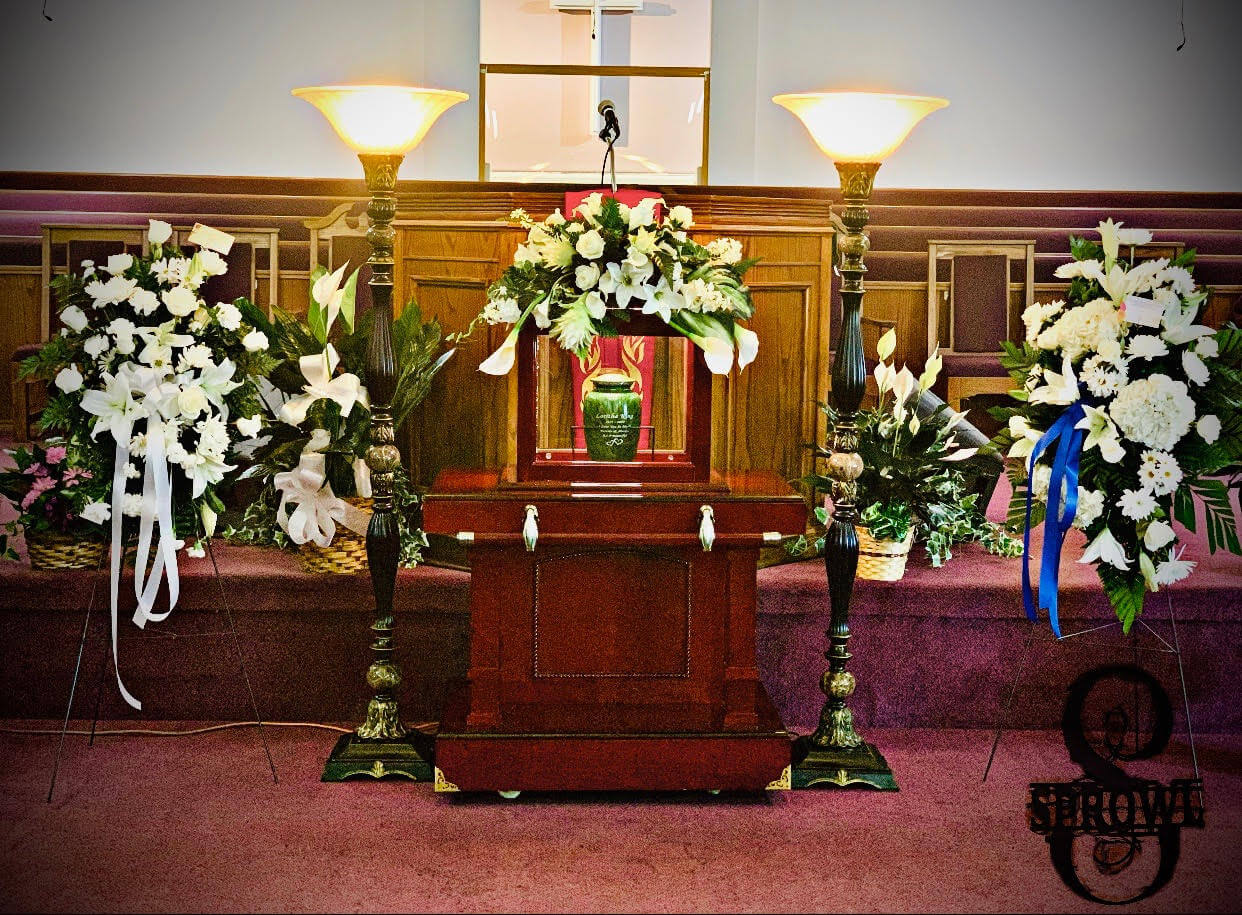
Cremation is an alternative to burials and less expensive. When choosing cremations, we want to help you honor your loved one. Cremation with a service option has become an increasingly common and affordable way to honor love ones while preserving the integrity of traditions. No matter what choice you make, we want to be there for you and help honor you or your love ones wishes.
At Sprowl we also offer pet services including memorials, paw prints, urns, and keepsake merchandise to honor your loved pets.

MEMORIAL SERVICE
Just like a funeral service, a memorial service is a time to remember your loved one. This can be held shortly after death or weeks later, with or without an urn present. What’s important is that it creates a time and a place for family and friends to gather together and support one another, share memories and pay their respects. We can hold a memorial service at our funeral home, the final resting place or at your home.
VETERANS
Greater love has no one than this, that he lay down his life for his friends. John 15:13
At Sprowl we support our troops and respect the sacrifices made by veterans on our behalf. We are honored to serve active and honorably discharged Veterans of the United States of America. We will make sure all veterans receive the honors earned through their sacrifice and service. Our funeral home will coordinate military benefits for your loved one which includes securing applicable benefits, “Taps” and flag presentation at burial reception. In addition to military honors benefits we offer discounted funeral services. Please call for details or assistance for military benefits.
